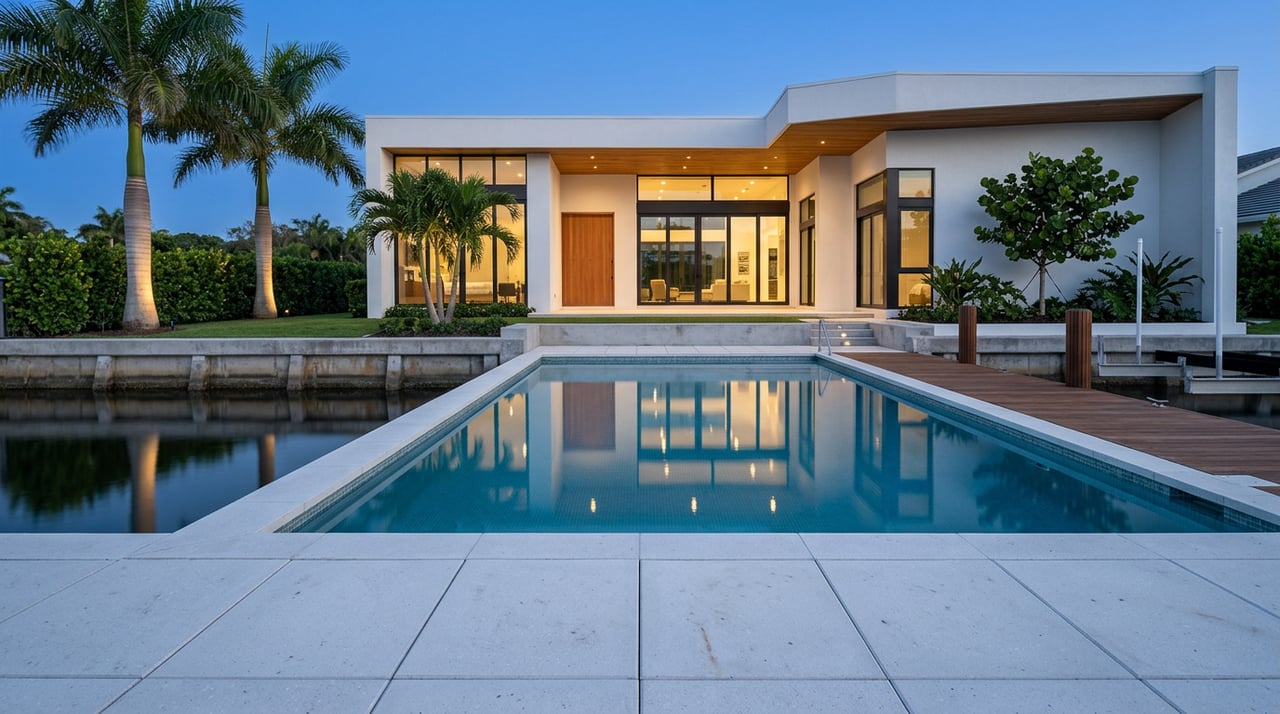
Thinking about selling your Lauderdale Harbours waterfront home? Today’s market rewards sellers who speak to boaters first, price with precision, and handle permits and insurance details before launch. You want a smooth sale with fewer surprises and strong offers. This guide shows you what drives price and days on market, how to prep your property, and the marketing moves that resonate with serious waterfront buyers. Let’s dive in.
Market snapshot for Lauderdale Harbours sellers
Northeast Broward’s ocean‑access single‑family market has shifted back toward normal inventory and absorption. A local waterfront report shows a recent six‑month median around $1.75M, with some Fort Lauderdale bands trending higher at times. See the broader context in the NE Broward Waterfront Market Watch.
At the county level, buyers have more room to negotiate than in 2021–22. City and county metrics show longer timelines compared with national norms, pointing to a balanced or sometimes buyer‑leaning market. Review current city and county trends via Broward County market data when you set strategy.
In Lauderdale Harbours, price bands vary widely based on water type and condition. Recent neighborhood examples range from renovated deep‑water homes in the mid‑ to high‑million range to new construction on wide canals offered in the high single‑digit millions, such as a deep‑water estate on SE 14th Street with no fixed bridges illustrating the premium for new builds and wide/deep access. The takeaway is simple: documented deep water, no fixed bridges, and turnkey condition sit on a different pricing ladder than older, narrow‑canal homes.
What this means for your pricing
- Use recent, like‑kind waterfront comps within Lauderdale Harbours and adjacent ocean‑access enclaves.
- Segment by water type, canal width, dock capacity, lift ratings, and renovation level.
- Expect more negotiation than during the pandemic peak; presentation and documentation help protect your ask.
What moves price and days on market
Dockage and lift capacity
For boat‑minded buyers, dockage is the first filter. Dock length, clear beam between pilings, lift capacity, and shore power all matter. Buyers want to know their vessel fits without costly changes. Provide measured dimensions, lift ratings, and recent service records. To see how buyers think about these details, review this plain‑English primer on waterfront terminology and boat‑fit.
Canal width, depth, and navigability
Measured depth at mean low water, turning room, and any known dredging history influence who will bid. Narrow or shallow canals can cap the buyer pool for larger boats. Document depth and turning radius so buyers understand their options.
Lot orientation and exposure
Sun and breeze patterns shape how buyers use outdoor space. Clear photography and aerials that show view corridors, privacy, and boat traffic patterns help buyers picture daily life at your dock.
Seawall condition and repair costs
A weak seawall can stall a sale or trigger steep discounts. Bring a current marine inspection and any engineer signoffs to market. Regional cost guides show that repairs or replacement can run from hundreds to low‑thousands per linear foot depending on scope, so clarity matters. Learn what buyers and lenders expect by reviewing a recent overview of seawall repair and replacement costs.
Home systems and resiliency
Roof age, impact openings, drainage, and electrical capacity for dock gear signal lower risk to buyers and insurers. A short list of recent capital upgrades, with receipts and warranties, often leads to faster offers and fewer contingencies.
Permits and legal status
Dock, lift, seawall, and dredge work can involve multiple agencies. Gaps in the permit trail create friction with buyers and lenders. Before listing, verify records and be ready to share them. Start with Florida’s ERP e‑permitting resources for state and local review steps.
Insurance and flood exposure
Most waterfront homes sit in FEMA flood zones, and premiums affect buyer budgets. Provide the current flood‑zone designation and any elevation certificates. Broward County’s interactive map is the public reference many buyers use; confirm your property’s zone with the Broward flood maps.
Pre‑listing checklist that pays off
Tackle these items in order. You will remove buyer objections and protect your price.
- Marine inspection and estimates
- Hire a reputable marine contractor to inspect the seawall, dock, piles, and lift. Request a written report and cost ranges for any recommended work.
- If work is needed, start early. Permits may take weeks or months.
- Permit audit and as‑builts
- Collect permits, plans, and final inspections for dock, lift, and seawall work.
- If documents are missing, consult a permitting specialist and reference Florida DEP ERP guidance to map the path to compliance.
- Flood and elevation documents
- Provide your FEMA panel and any elevation certificates.
- Note any observed tidal events or recent neighborhood mitigation projects for transparency.
- Boat‑fit and navigational summary
- Measure dock length and beam, note lift specs, and confirm depth at mean low water.
- Create a one‑page “boat‑fit” memo with run time to the inlet. Buyers value clarity.
- Home systems and upgrades packet
- Pre‑inspect roof, HVAC, electrical, and impact protections.
- Summarize upgrades that affect insurability and reliability. Include receipts and warranties when available.
- Insurance check
- Obtain sample homeowner and flood quotes for a typical buyer profile to help them evaluate total cost.
- Targeted prep and staging
- Prioritize high‑ROI items: dock and lift service, seawall cap touch‑ups, pressure clean, exterior paint, pool service, landscaping, and fresh mulch.
- Stage outdoor zones to highlight entertaining and docking ease.
Timing note: Cosmetic prep can be done in weeks. Major seawall or unpermitted work could take several months. If you plan to sell in the next 6 to 18 months, start the marine and permitting steps now.
Pricing and appraisal strategy
Appraisers rely on like‑kind waterfront comparables. That means the same water type, access, and similar dock capability rather than generic city medians. A helpful overview of how waterfront adjustments are supported is here: how appraisers value waterfront premiums.
Use a comp set that isolates:
- Ocean access vs. fixed‑bridge canals.
- Canal width, depth, and turning room.
- Dock and lift size versus target buyer boat profiles.
- Renovation level and resiliency features.
Price within your segment and let documentation do the heavy lifting. In today’s balanced conditions, a polished, well‑documented home often defends a stronger asking price than a higher, unprepared comp.
Marketing that sells waterfront homes
Lead with what boaters value
Front‑load key facts in your listing and property page: no fixed bridges, measured dock depth and beam, lift capacity and service dates, navigational route and time to the inlet, seawall age and repairs, and major resiliency updates. This is what qualified buyers and their lenders want to see first.
Invest in the right visuals
- Aerial and twilight photography to show canal width, view corridors, and access to the inlet.
- Bright, high‑quality interiors and floor plans so buyers map furniture and flow.
- Optional 3D tour to help remote and out‑of‑state buyers self‑select before flying in.
Use Compass programs with purpose
- Compass Concierge can fund high‑impact prep like staging, paint, flooring, and light repairs with payment at closing. It is ideal for elevating presentation quickly. Learn more about Compass Concierge.
- Pre‑marketing works. Compass reports that Private Exclusive and Coming Soon campaigns often correlate with faster offers on launch and fewer price reductions compared with going straight to MLS. See the brokerage’s public notes on pre‑marketing performance in their Q1 2025 results.
Thoughtful showings
Schedule broker events to catch great light and favorable tides. For qualified yacht buyers, consider private, boat‑based showings when safe and permitted. At the property, provide a simple handout that summarizes boat‑fit, depth, and recent marine inspections.
Real examples that set expectations
- Renovated deep‑water on SE 14th Street: A polished, south‑facing canal home can sit in the mid‑ to high‑million range when dock specs and presentation align with buyer needs.
- New construction deep‑water estate: Wide canal, no fixed bridges, and modern systems support elite pricing, as shown by this new SE 14th Street build.
These examples illustrate the premium ladder. New builds and documented deep‑water access tend to run on their own track, while older canal homes may require price adjustments unless refreshed and fully documented.
Avoid costly surprises
- Missing permits for docks, lifts, or seawalls can derail a deal late. Start your permit audit early and use Florida DEP ERP resources to understand next steps.
- Underdisclosing flood risk can lead to retrades after insurance quotes land. Share your flood‑zone status and any elevation certificates up front, and point buyers to the Broward flood map for independent verification.
- Neglecting the seawall or lift invites discount bids. A clean marine report with estimates preserves leverage and sets clear expectations.
Your next steps
- Book a marine inspection and gather permits and as‑builts.
- Compile your flood and elevation documents and confirm the current insurance picture.
- Tackle targeted prep and staging, with extra attention on the dock and outdoor spaces.
- Build a comp‑driven pricing strategy that reflects your specific water type, dockage, and condition.
- Pre‑market with intention to prime demand and launch strong.
If you want a hands‑on plan tailored to your dock, canal, and timeline, connect with Hanh Dinh for a personalized seller consultation. You will get a clear prep checklist, a comp‑based pricing strategy, and a marketing plan designed for Lauderdale Harbours waterfront buyers.
FAQs
What should Lauderdale Harbours sellers know about today’s market?
- Expect more negotiation and longer timelines than the 2021–22 peak. Pricing accuracy and strong presentation are key to securing the best offer.
How do dock specs affect my sale price?
- Measured dock length, beam, and lift capacity directly influence buyer fit and offer strength. Document them and include recent service records to reduce friction.
Do I need to replace a tired seawall before listing?
- Not always. Get a marine inspection with written estimates. You can either address the work pre‑listing or price accordingly with transparent documentation.
What permits do buyers expect to see?
- Dock, lift, and seawall permits with final approvals, plus any dredge or environmental reviews. Missing records can slow deals or spook lenders.
How should I choose my list price for a canal home?
- Use recent, like‑kind waterfront comps segmented by ocean access, canal width and depth, dock and lift specs, and renovation level. Appraisers lean on these same factors.